Published on 18 October 2026 By Kidori team
Personalised stories for kids
A story with a hero that fits your child. What makes it work, and what to look for.
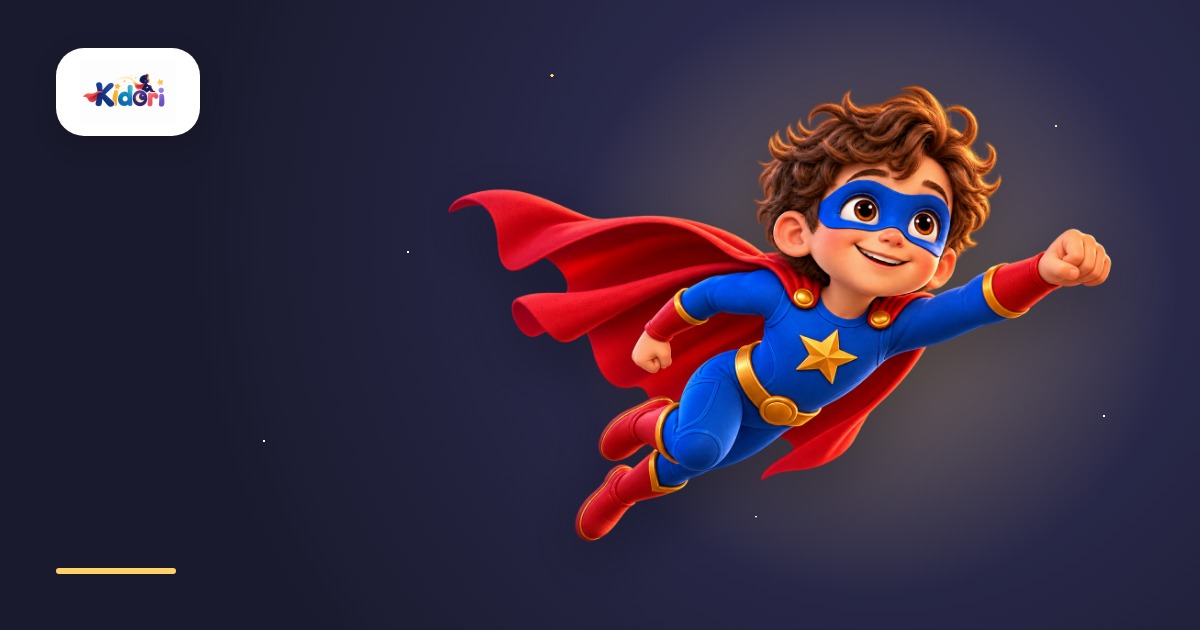
Why personalised stories hold attention
Personalised stories are built around one particular child: a hero that suits them, details from everyday life and a plot that feels close to home. That is more than a nice surprise. The story feels recognisable, and recognition makes it easier to join in.
Children often enjoy stories that include something they already know: a favourite hobby, a cuddly toy, a funny habit or a friend. A hero with a colour, a cape or a special gift makes the story personal without making it complicated.
Personal does not mean the story has to be about the child. A good story gives the hero room to grow, make mistakes and do something kind. The hero carries the story. It is not a copy of your child.
What makes a strong hero
A strong hero has a few clear traits: a name, a distinct personality and a way of talking your child enjoys. Do not write a list of a hundred things. Three or four traits your child recognises straight away work better.
- A name your child can say easily
- A trait that suits your child, such as curious or helpful
- A colour, outfit or symbol that returns in every story
- A small weakness or joke that makes the hero feel human
Add your own ideas to each story
Next to the hero you can add a parent prompt: an idea, mood or lesson that should come back in the story, such as “a friendly dragon who is scared of thunder”. The story then connects to what happened that day, and you do not have to write it yourself.
Choose your prompt with care. It works best when it names a feeling or a question your child is living with: courage before a new school, worry about a friend or simply a wish for adventure. Keep it short and concrete, and the story stays calm.
Personal, but never complicated
Personalised stories work best when they stay calm. Your child does not need to recognise everything, and the story does not need to replay the day. A few familiar details are enough to make it feel like yours.
Kidori uses the language of each child profile, so an English-speaking family gets English stories and a Dutch family gets Dutch ones. In child mode your child chooses a hero and a story, while settings stay with the parent. New heroes are made in the parent area, and after the first pet photo your child can also add a pet themselves.
When a story does not land
Not every story suits every child. That is normal, and it says nothing about your child or about your choices. If you notice your child pushing a story away or not wanting to listen, look at the length, the pace and the hero. Often it helps to make the story shorter or to choose a different trait.
Ask your child what they like too. Children often know exactly which detail is missing: an animal, a colour or a place they would like to visit. You can put that suggestion into the next prompt. The story then grows with your child’s interests and does not feel like something you invented for them.
Remember that personal does not have to mean heavy. A story can simply be fun. An adventure with a funny hero, a small challenge and a cheerful ending is enough to make the story yours.
Tip: read the story aloud to yourself once first. If the hero sounds natural and the length suits the evening, it is usually a good story for your child. If something feels off, feel free to change a word or two as you read.
Let your child live their own story tonight
The Family plan lets you create bedtime stories and interactive stories around a hero you choose. You can try it free for 14 days.
Try free for 14 days14 days free with the Family plan. You decide what happens in the story.